

The Real Reason San Francisco Cannot Build Affordable Housing: It’s Not Just NIMBYism
Jun 19, 2026

The Real Reason San Francisco Cannot Build Affordable Housing: It’s Not Just NIMBYism
By Hans Hansson, Starboard Commercial Real Estate
San Francisco’s housing crisis is often framed as a political problem. The prevailing narrative is simple: neighborhood opposition — “Not In My Backyard” — blocks development, and until that resistance is overcome, the city cannot build its way to affordability.
But that explanation, while convenient, misses the larger point. The real constraint on affordable housing in San Francisco is structural. It is rooted in the city’s physical limitations, infrastructure capacity, and competing land-use demands — challenges that no amount of political will alone can fully resolve.
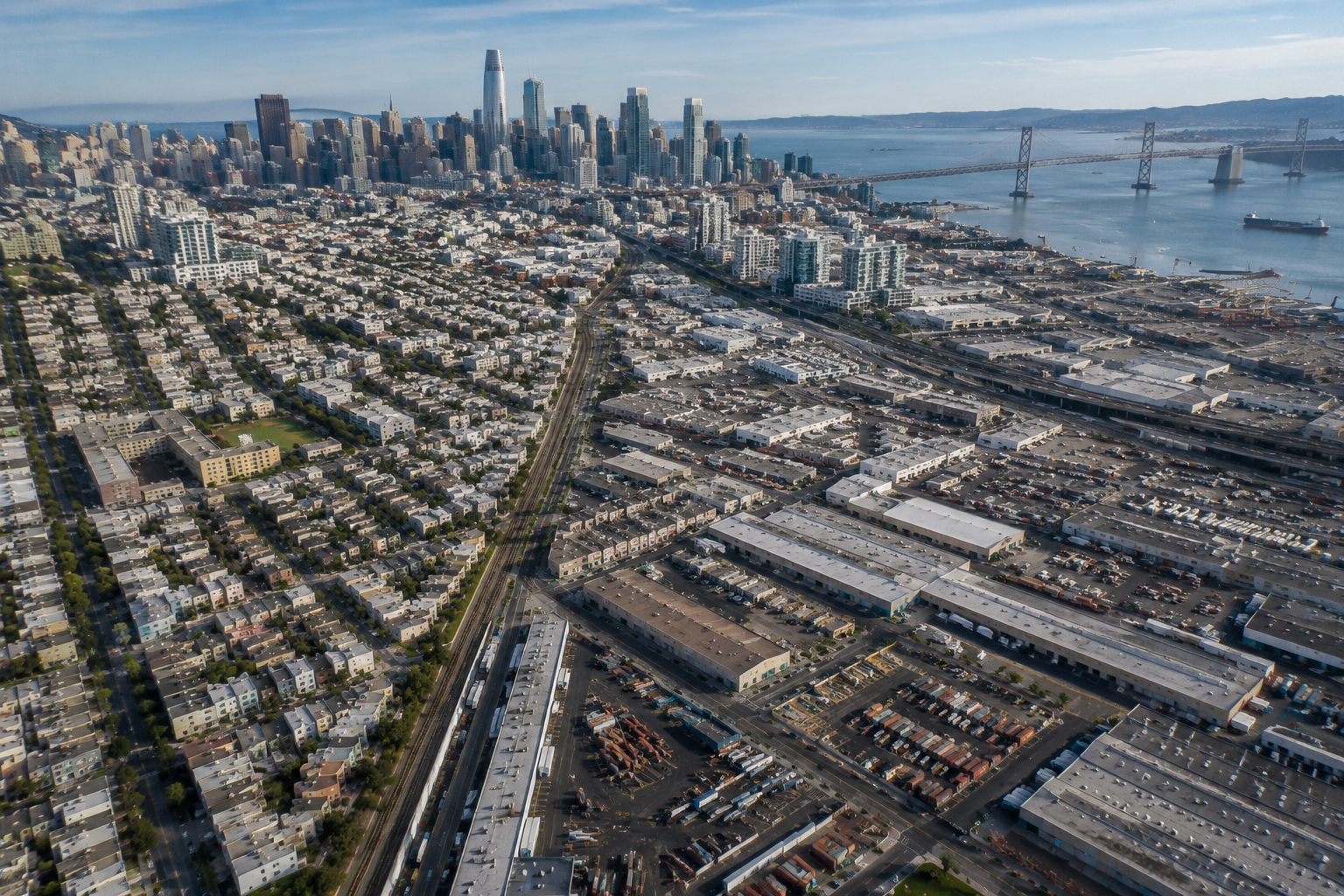
San Francisco is a 49-square-mile city. It cannot expand outward. There are no new freeways to build, no meaningful opportunities to widen major corridors, and limited ability to significantly expand mass transit capacity in the near term. The city is, for all practical purposes, built out.
That reality fundamentally changes how housing works here.
Every additional unit is not simply adding supply — it adds demand on systems that are already stretched. Transit systems, utilities, schools, and public services all face incremental pressure with each new development. For residents, this manifests in longer commutes, more congestion, limited parking, and the perception that quality of life is increasingly compressed.
This concept — compression — is central to understanding San Francisco’s housing debate.
When residents oppose new development, it is often characterized as reflexive NIMBYism. But in practice, much of that resistance stems from living in a city where density continues to increase without corresponding expansion in the infrastructure required to support it. The issue is not purely philosophical; it is operational.
A recent case illustrates this dynamic. The 100% affordable housing project at 2550 Irving Street in the Sunset District — a 90-unit development — became one of the most protracted land-use battles in the city in recent years. The project endured years of appeals and legal challenges before finally moving forward. [sfgate.com], [therealdeal.com]
Even after approval, it highlights another uncomfortable reality: scale. A seven-story structure in a predominantly low-rise neighborhood inevitably feels out of context. But this is not accidental — it is financial. Given the cost of land, construction, and prolonged entitlement timelines, projects must reach a certain scale to be economically viable. The result is a pattern of developments that often exceed the existing character of the neighborhoods in which they are built.
San Francisco does not just struggle to build housing — it struggles to build housing that fits within its existing urban fabric.
The question then becomes: where can the city realistically add housing?
Over the past two decades, the answer has been clear. The vast majority of new development has occurred in the eastern neighborhoods — South of Market, Mission Bay, and Bayview-Hunters Point — where zoning allows for higher density and mixed-use projects. In contrast, much of the city’s western and northern neighborhoods have experienced relatively minimal growth. [sfplanning.org]
This strategy, however, introduces a second, less-discussed challenge: the loss of industrial capacity.
The same eastern neighborhoods absorbing housing growth are also home to much of San Francisco’s production, distribution, and repair economy. These areas support small manufacturers, service providers, logistics companies, and the critical infrastructure that underpins a functioning urban economy.
The broader Bay Area already faces a constrained industrial and warehouse market, with limited availability of space for logistics and distribution uses. Converting industrial sites into residential projects further restricts that supply, creating downstream economic consequences that are rarely part of the housing conversation. [warecre.com]
This leaves San Francisco with a difficult set of trade-offs. To add significant housing, the city must either:
• Increase density in established residential neighborhoods that were not designed to accommodate it, or
• Convert industrial land into residential use, reducing the capacity of the local economy
Neither path is without cost.
Compounding these structural challenges is the city’s well-documented entitlement process. San Francisco continues to have one of the most complex and time-consuming approval frameworks in California. Projects routinely face multiple layers of discretionary review, appeals, and legal challenges, adding years to development timelines and significantly increasing costs. [gov.ca.gov]
For affordable housing in particular, these delays can be devastating, driving per-unit costs to levels that undermine the very objective of affordability.
Taken together, these realities explain why San Francisco continues to fall short of its housing goals.
This is not simply a case of residents opposing growth. It is the result of trying to accommodate significant population increases within a fixed geographic footprint, without commensurate expansion in infrastructure, and while competing for land that serves essential economic functions.
The outcome is predictable: prolonged development timelines, rising construction costs, projects that feel out of scale, and persistent conflict between stakeholders.
If San Francisco is to meaningfully address its housing crisis, the public conversation must evolve. It cannot remain framed as NIMBY versus YIMBY. Instead, it must grapple with a more difficult but necessary question: what does sustainable growth look like in a city that cannot physically expand?
Until that question is answered — with a coordinated approach to infrastructure investment, land-use balance, and economic preservation — the city will continue to encounter the same challenges, one project at a time, without fundamentally changing the trajectory of housing affordability.
Written by: Hans Hansson
[email protected]
Hans Hansson is the President of Starboard Commercial Real Estate. Hans has been an active broker for over 35 years in the San Francisco Bay Area and specializes in office leasing and investments. If you have any questions or comments, please email [email protected] or call him at (415) 765-6897. You may also check out his website, https://www.hanshansson.com