

San Francisco’s One-Way Streets: Isolation and Opportunity Around the Transamerica Pyramid
Feb 23, 2026

San Francisco’s One-Way Streets: Isolation and Opportunity Around the Transamerica Pyramid
An Analytical Look at Urban Planning, Traffic Policy, and the Future of City Streets
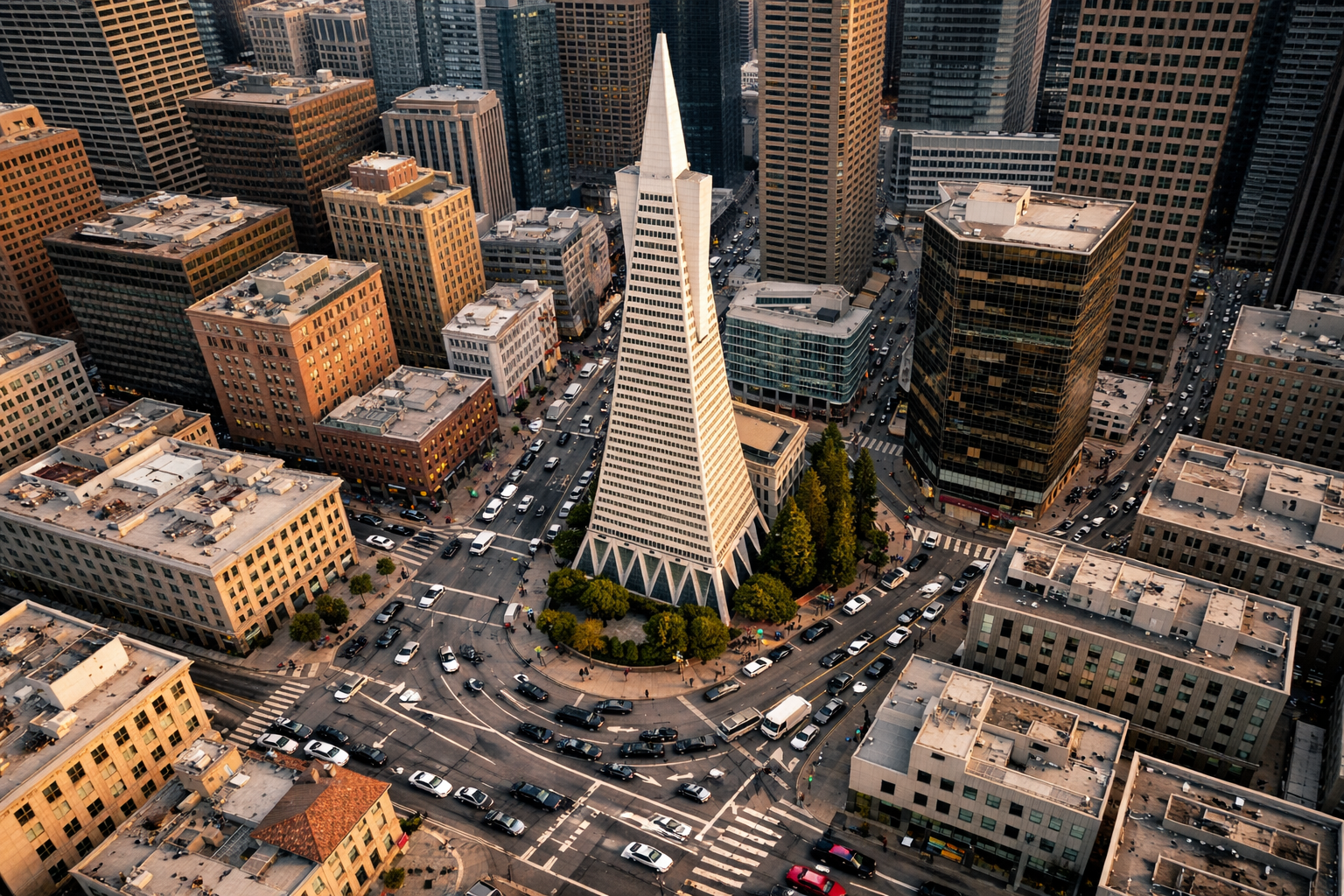
San Francisco’s street grid, celebrated for its character and complexity, has long been defined by a network of one-way streets. Nowhere is this more apparent—or problematic—than in the area surrounding the iconic Transamerica Pyramid. Here, Clay, Montgomery, and Washington Streets converge in a way that seems to isolate the Pyramid from the flow of the city, creating unique challenges for both drivers and pedestrians. As San Francisco reconsiders its urban design and traffic policies, the fate of these one-way streets is increasingly central to conversations about accessibility, congestion, and the city’s future.
The Transamerica Pyramid: A Landmark in Isolation
Standing tall and unmistakable in San Francisco’s Financial District, the Transamerica Pyramid is surrounded by a web of one-way streets that complicate access. Clay, Montgomery, and Washington Streets, all running one-way in different directions, effectively box in the building. For drivers, this configuration means there is no straightforward way to pull over in front of the Pyramid; detours and circuitous routes are often necessary, frustrating those hoping to drop off passengers or make deliveries. The building’s isolation is not merely a matter of inconvenience, but a reflection of broader urban planning choices that continue to shape the city’s daily rhythms.
Pedestrian and Driver Experience: Navigating the Maze
The challenges extend beyond drivers; pedestrians must also contend with the city’s one-way design. On Front Street, narrow sidewalks and heavy traffic make walking less pleasant, especially during peak hours. For those arriving from the Ferry Building, the route to the Transamerica Redwood Grove—a tranquil urban oasis—can feel convoluted and indirect. The maze-like configuration often forces pedestrians to cross multiple intersections, wait for traffic lights, and navigate around roadblocks, all of which undermine the city’s efforts to promote walkability and public transit. Meanwhile, drivers face frequent traffic jams and limited options for quick stops, particularly in the dense area around the Pyramid.
Historical Context: The Legacy of One-Way Streets
The prevalence of one-way streets in downtown San Francisco is not accidental, but rooted in mid-20th-century urban planning. The city once boasted several elevated freeways, including the Embarcadero Freeway, which was demolished after the 1989 Loma Prieta earthquake. Many streets, including Clay and Montgomery, were converted to one-way to facilitate high-speed traffic flow and connect with these now-vanished freeways. The goal was to move cars efficiently in and out of the city center, with little regard for pedestrian experience or the needs of local businesses. Today, the rationale for these one-way patterns has faded, but their impact remains.
Current Impact: Traffic Jams and Roadblocks
Decades after the removal of the Embarcadero Freeway, the legacy of one-way streets lingers in the form of traffic jams, confusing detours, and roadblocks. The original intent—to ease congestion and streamline commutes—has been replaced by bottlenecks and inefficiency, especially during rush hour. Drivers are forced to loop around blocks, increasing the time and distance for even the simplest trips. Pedestrians, meanwhile, find themselves hemmed in by heavy traffic and limited crossing options. The question for San Francisco is no longer whether one-way streets serve their original purpose, but whether they make sense for a city striving to be more accessible and sustainable.
City Policy and Studies: Evaluating Effectiveness
San Francisco has begun to critically assess the effectiveness of its one-way street policies. Recent studies by city planners and transportation departments have examined whether converting some streets back to two-way traffic could ease congestion, improve safety, and foster economic activity. Pilot projects in other neighborhoods have shown promise, with improved pedestrian access and reduced traffic speeds. However, the process is complicated by concerns about emergency access, loading zones, and the impact on public transit. Ongoing reviews continue to weigh the benefits and drawbacks, with community input playing a crucial role in shaping policy.
Converting Streets: Process and Considerations
Changing one-way streets to two-way is not simply a matter of flipping signs. Planners must consider traffic flow, street width, intersection safety, and the needs of local residents and businesses. Extensive traffic studies are conducted to predict impacts, and public hearings are held to gather feedback. Infrastructure changes—such as new signals, lane markings, and curb adjustments—can be costly and time-consuming. The city must also coordinate with police, fire, and transit agencies to ensure continued access and safety. Despite these challenges, the potential benefits of conversion—including reduced congestion and enhanced walkability—make it a compelling option for San Francisco’s future.
Rethinking the Future of San Francisco’s Streets
The area around the Transamerica Pyramid illustrates both the strengths and weaknesses of San Francisco’s one-way street system. As the city evolves, so too must its approach to urban design and traffic management. By reexamining the historical reasons for one-way streets, addressing the challenges faced by drivers and pedestrians, and embracing innovative policy changes, San Francisco has the opportunity to reconnect its cityscape and create a more accessible, vibrant downtown. The path forward may not be simple, but it is essential for the city’s continued vitality and growth.
Written by: Hans Hansson
[email protected]
Hans Hansson is the President of Starboard Commercial Real Estate. Hans has been an active broker for over 35 years in the San Francisco Bay Area and specializes in office leasing and investments. If you have any questions or comments, please email [email protected] or call him at (415) 765-6897. You may also check out his website, https://www.hanshansson.com