

The Proposed San Francisco Parcel Tax and the Real Issue Behind Muni’s Budget Shortfall
Feb 6, 2026

The Proposed San Francisco Parcel Tax and the Real Issue Behind Muni’s Budget Shortfall
San Francisco is once again weighing a new parcel tax—this time aimed at filling a widening budget gap at the Municipal Transportation Agency (Muni). The proposal arrives at a moment when the city is struggling to maintain reliable transit service, retain riders, and stabilize its finances. But as the debate unfolds, one question keeps resurfacing: Is a new tax really the solution, or is the city overlooking a far more basic problem—fare collection?
I’ve recently started taking Muni more often, especially the buses and streetcars that run above ground. What I’ve seen firsthand makes it difficult to believe that the agency’s deficit is solely the result of economic downturns or declining ridership. Instead, it’s impossible to ignore the everyday reality that a huge portion of riders simply aren’t paying.
A System Built on Trust—But Not Enforcement
Inside the Muni Metro tunnels, the system is straightforward. Riders enter through turnstiles, tapping a Clipper card or purchasing a ticket before stepping onto the platform. It’s controlled, predictable, and nearly impossible to bypass without paying.
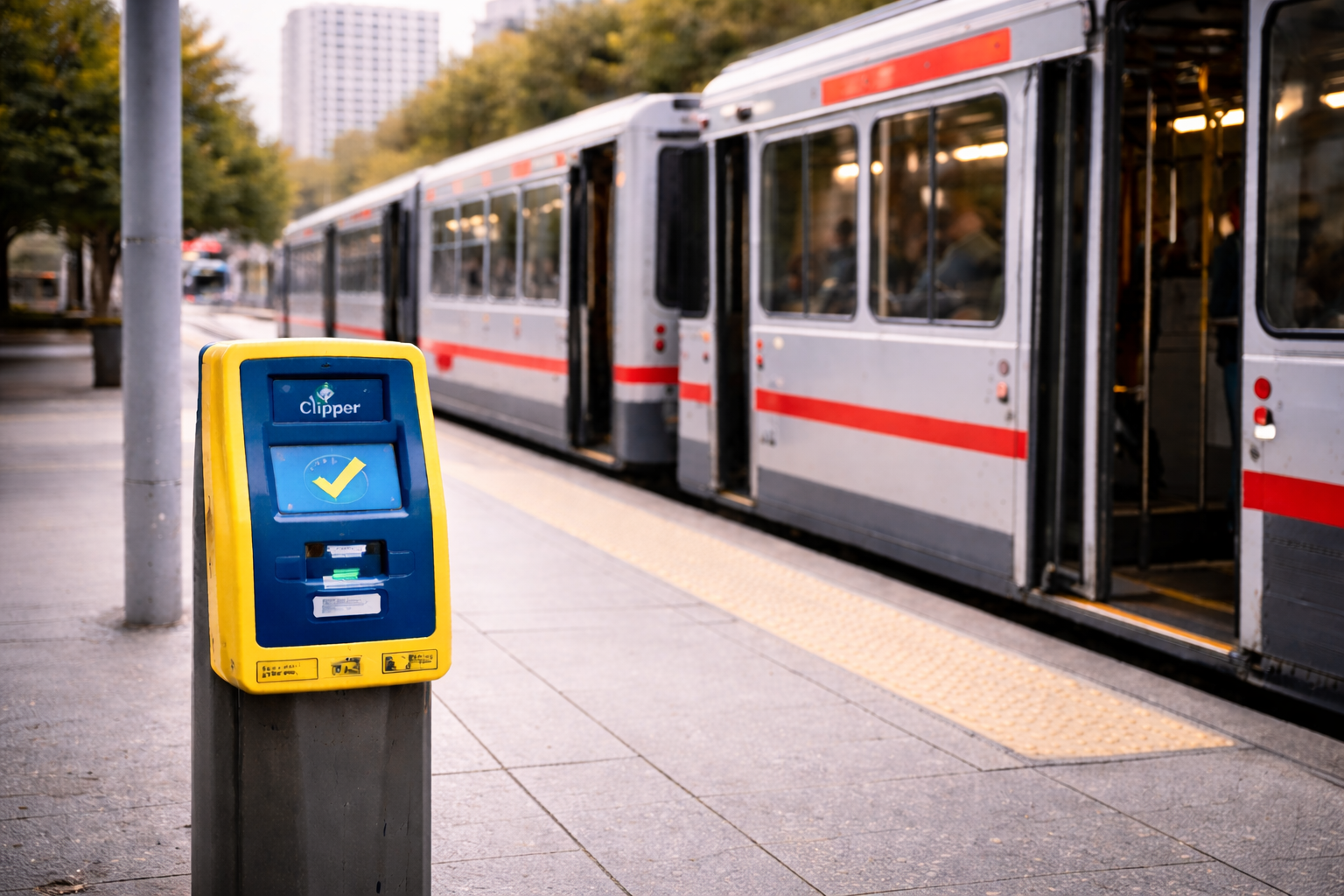
But outside the tunnels, the experience is entirely different. Buses and streetcars open multiple doors at stops, and passengers are expected to pay at onboard kiosks or tap their Clipper cards at the front. In theory, this “proof of payment” system is meant to speed up boarding and reduce delays. In practice, it has become an open invitation for fare evasion.
On nearly every ride I’ve taken, I’ve watched people enter through the side or rear doors and walk straight to a seat. No tapping. No ticket. No hesitation. And no consequence.
At $2.85 per ride, it doesn’t take long to understand how this behavior snowballs into a massive revenue shortfall. When dozens of riders per vehicle skip payment, the math becomes staggering. Multiply that across hundreds of vehicles and thousands of daily trips, and the deficit begins to look less like a mystery and more like an inevitability.
What Changed—and Why It Matters
Years ago, the farebox or payment device sat right next to the driver. You couldn’t board without walking directly past the person operating the bus, and that alone created a natural deterrent. Drivers weren’t expected to police every rider, but their presence mattered.
Today, that safeguard is gone. The driver sits behind a protective barrier, focused on the road—as they should be. The payment machines are positioned away from the operator, and riders can enter from any door. The system relies almost entirely on voluntary compliance.
San Francisco technically deploys “fare inspectors,” uniformed officers who board vehicles to check proof of payment. But I can’t remember the last time I saw one. Months? Maybe longer. Without consistent enforcement, the system becomes symbolic rather than functional.
The Parcel Tax: A Solution or a Shortcut?
Supporters of the proposed parcel tax argue that Muni needs stable, long term funding to maintain service levels, modernize equipment, and avoid deep cuts. Those goals are legitimate. Public transit is essential to the city’s economic health, environmental goals, and accessibility.
But critics—and many everyday riders—are asking a reasonable question: Why should property owners shoulder another tax when the city hasn’t fixed the most obvious leak in the system?
If fare evasion is widespread, predictable, and largely unaddressed, then raising taxes becomes a way to compensate for a problem the city has chosen not to solve.
Two Paths Forward
Before San Francisco asks residents to pay more, it should confront the reality of how its transit system currently operates. That means choosing one of two honest approaches:
1. Reinforce Fare Collection
• Restore visible, consistent fare inspection.
• Reevaluate the placement of payment machines.
• Consider limited front door boarding during peak hours.
• Use technology—like platform validators or mobile scanners—to reduce loopholes.
These steps wouldn’t require punitive crackdowns; they would simply restore the expectation that paying is part of riding.
2. Acknowledge the Trend and Make Muni Free
If the city believes enforcement is inequitable, impractical, or philosophically misaligned with its values, then it should embrace the logical conclusion: make Muni free and fund it through taxes transparently.
Many cities have adopted fare free transit with success. If San Francisco wants to join them, it should do so intentionally—not by allowing a de facto free system to emerge through neglect.
A Tax Should Be the Last Step, Not the First
San Francisco’s transit system is too important to let drift into dysfunction. But asking residents to pay more without addressing the fundamental issue of fare collection feels like skipping the hard work in favor of the easy answer.
Before the city moves forward with a parcel tax, it owes riders—and taxpayers—a clear plan to either enforce the system it already has or redesign it entirely. Right now, Muni is effectively free for anyone willing to walk through a side door. The city should decide whether that’s a bug or a feature before it reaches for another tax measure.
Written by: Hans Hansson
[email protected]
Hans Hansson is the President of Starboard Commercial Real Estate. Hans has been an active broker for over 35 years in the San Francisco Bay Area and specializes in office leasing and investments. If you have any questions or comments, please email [email protected] or call him at (415) 765-6897. You may also check out his website, https://www.hanshansson.com